
What Is a Gear Reducer?
The clue is in the name. The most basic explanation of a gear reducer is this: it is a mechanical device that's designed to decrease the input speed from a motor while increasing its torque output. This is accomplished through gear ratios created by meshing gears in various configurations, such as planetary, helical, or bevel arrangements. The rotational speed and torque are determined by the gear configuration, size, and number of gears, which easily lends itself to a wide variety of applications and customizations.
One of the main reasons to choose a gear reducer is to minimize the wear and tear on downstream equipment, like conveyors, pumps, or robotic arms.
Due to their versatility, durability, and customizability, gear reducers are used in practically all industries and sectors, from robotics to material handling, from food mixers to wind turbines, and from delicate handling to heavy-duty applications.
How Do Gear or Speed Reducers Work?
As we just mentioned, a gear reducer is designed to decrease rotational speed from a motor while increasing torque through meshing gears.
The reducer’s drive gear is responsible for changing the speed, torque, and direction of the rotating shaft, which is essential for power transmission. In its most basic configuration, a smaller drive gear with fewer teeth turns a larger driven gear with more teeth, which then transmits the modified torque and speed to whatever application it's attached to.
For example, if the gear ratio is 29 teeth to 80 teeth, then the output rotates 2.76 times slower than the input, while at the same time delivering higher torque.
Types of Gear Reducers
Planetary Gear Reducers
- Axes: Coaxial
- Ratio range: 3:1-1000:1
- Efficiency: 94-98%
- Most suitable for: Robotics, compact torque
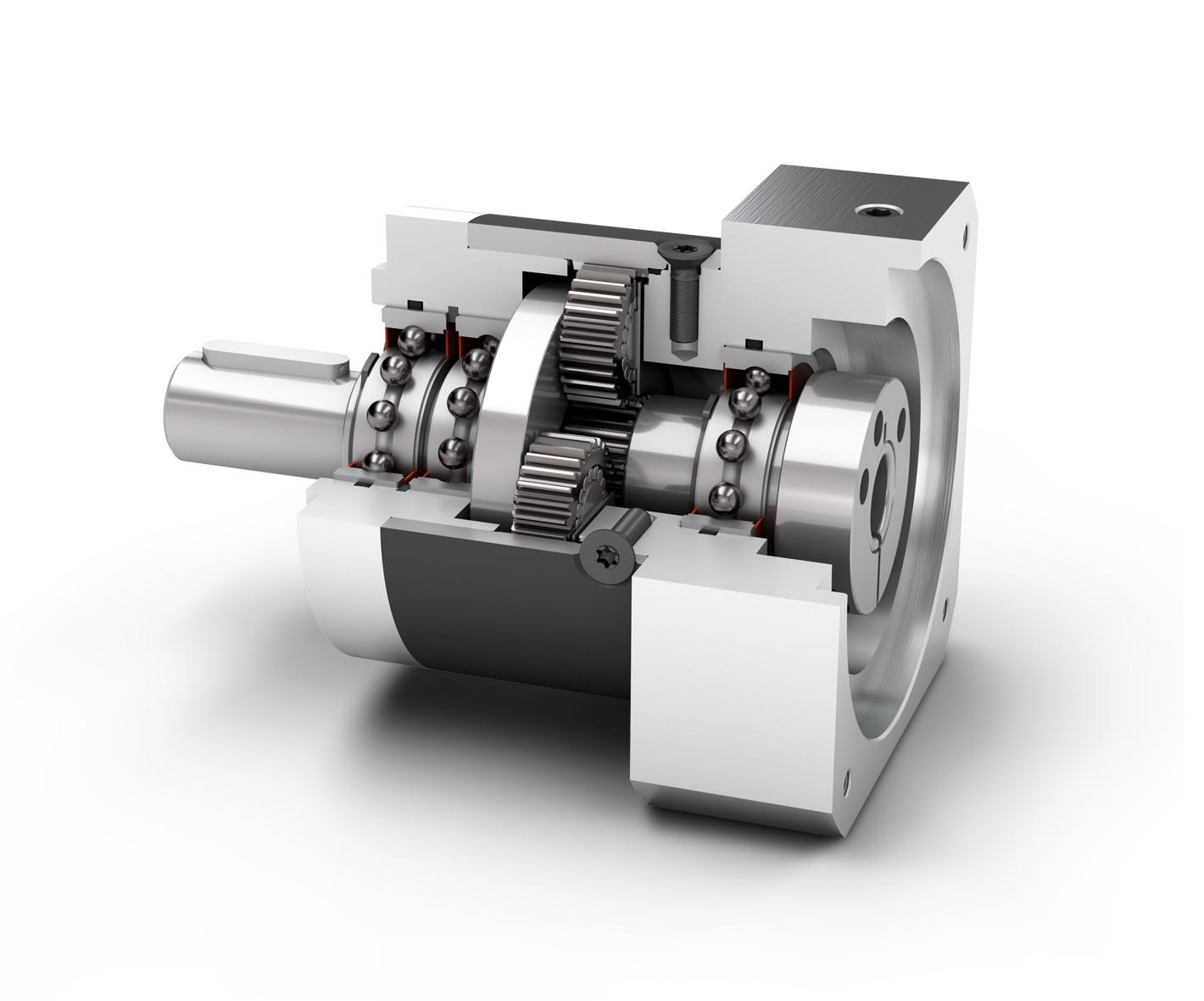
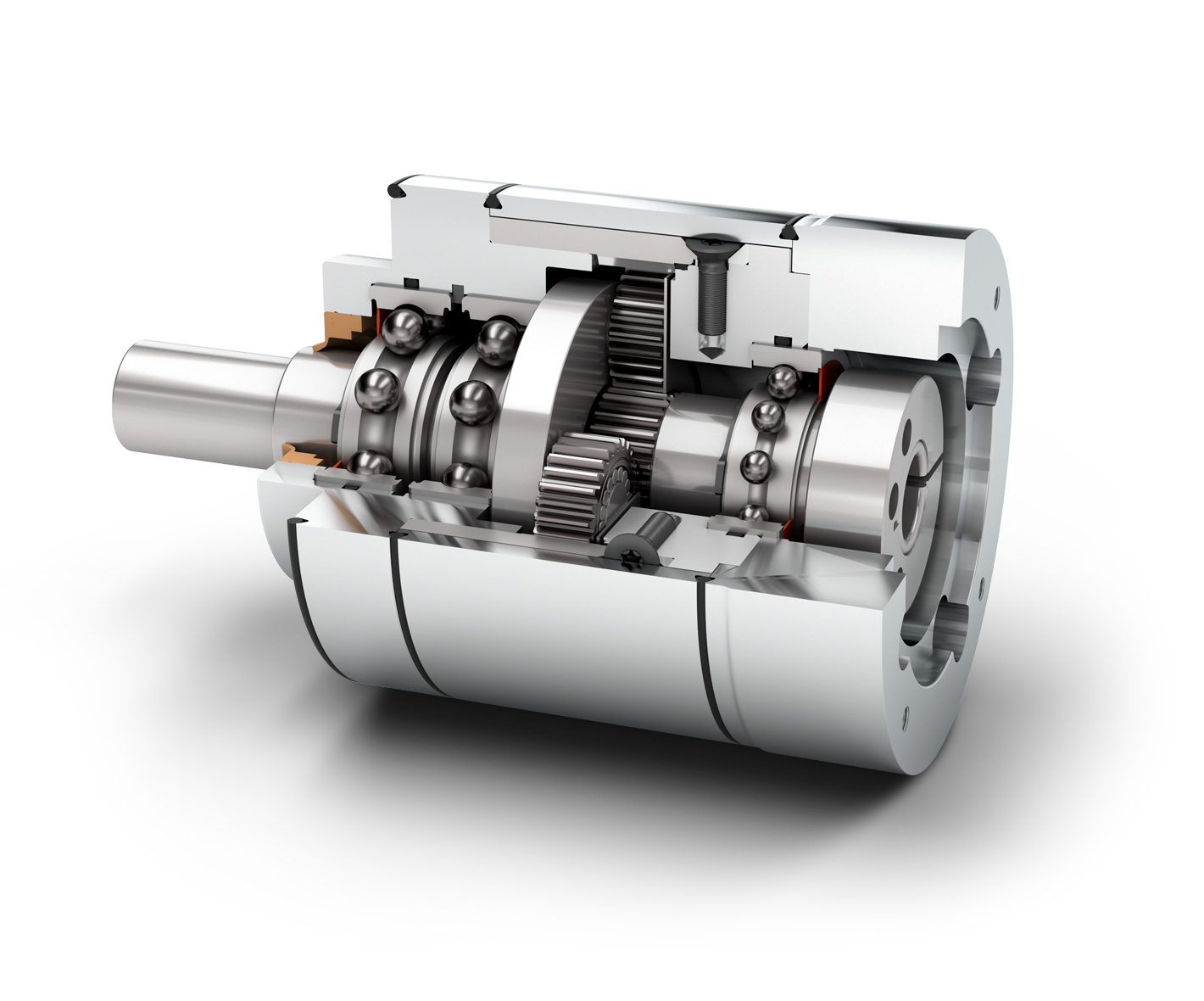
Planetary gear reducers are the most popular coaxial gearboxes, meaning their input and output shafts sit on the same axis. These gear reducers deliver high power in compact spaces, with a central sun gear driving the system while the planet gears rotate around it. The benefits of this type of gear reducer are its high efficiency, low clearance, and high torque density. If your applications require slow speed and high torque, this may be the right type of gear reducer for your needs.
Bevel Gear Reducers
- Axes: Right
- Ratio range: 1:1-5:1
- Efficiency: 90-95+%
- Most suitable for: Drills, direction change
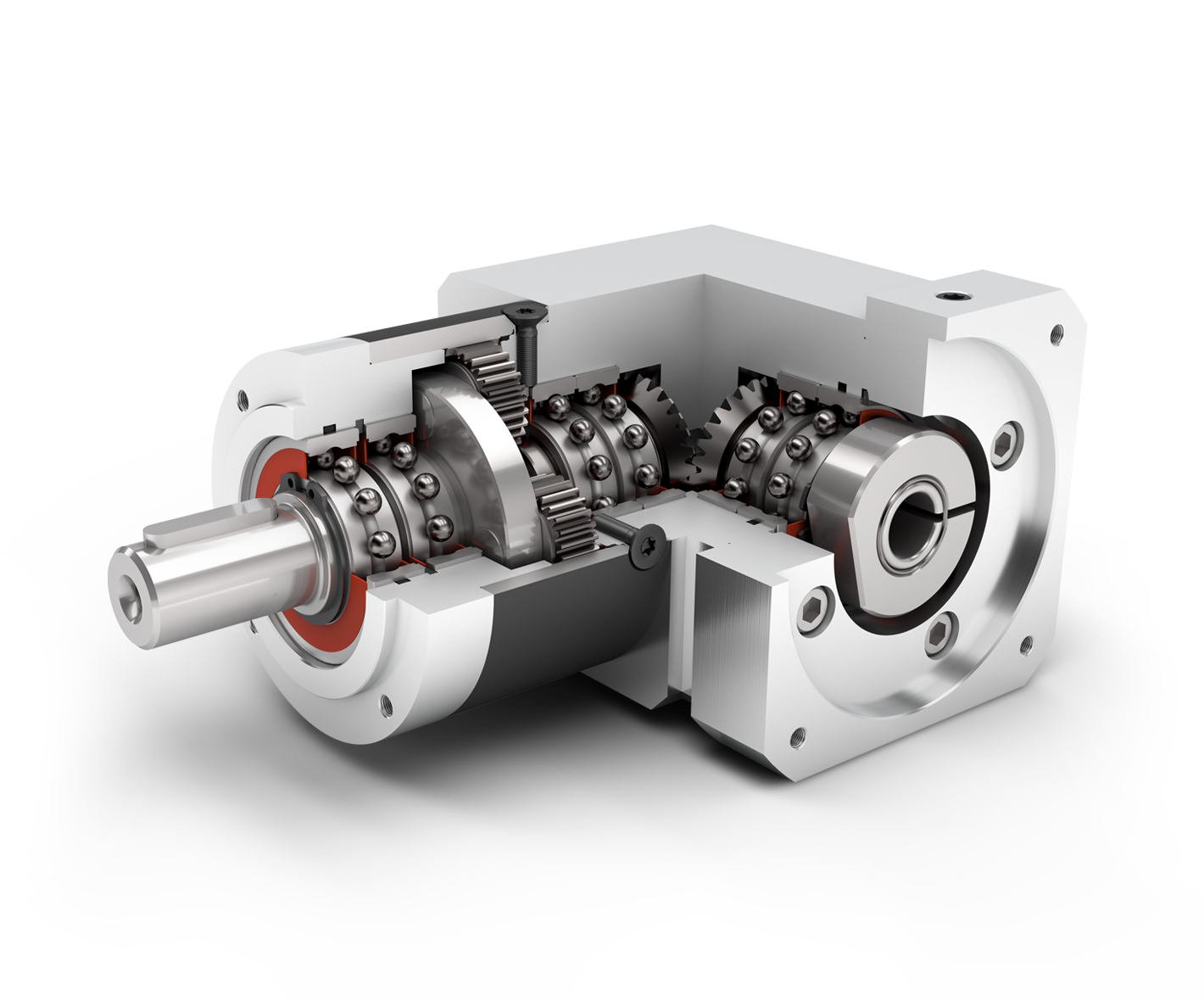
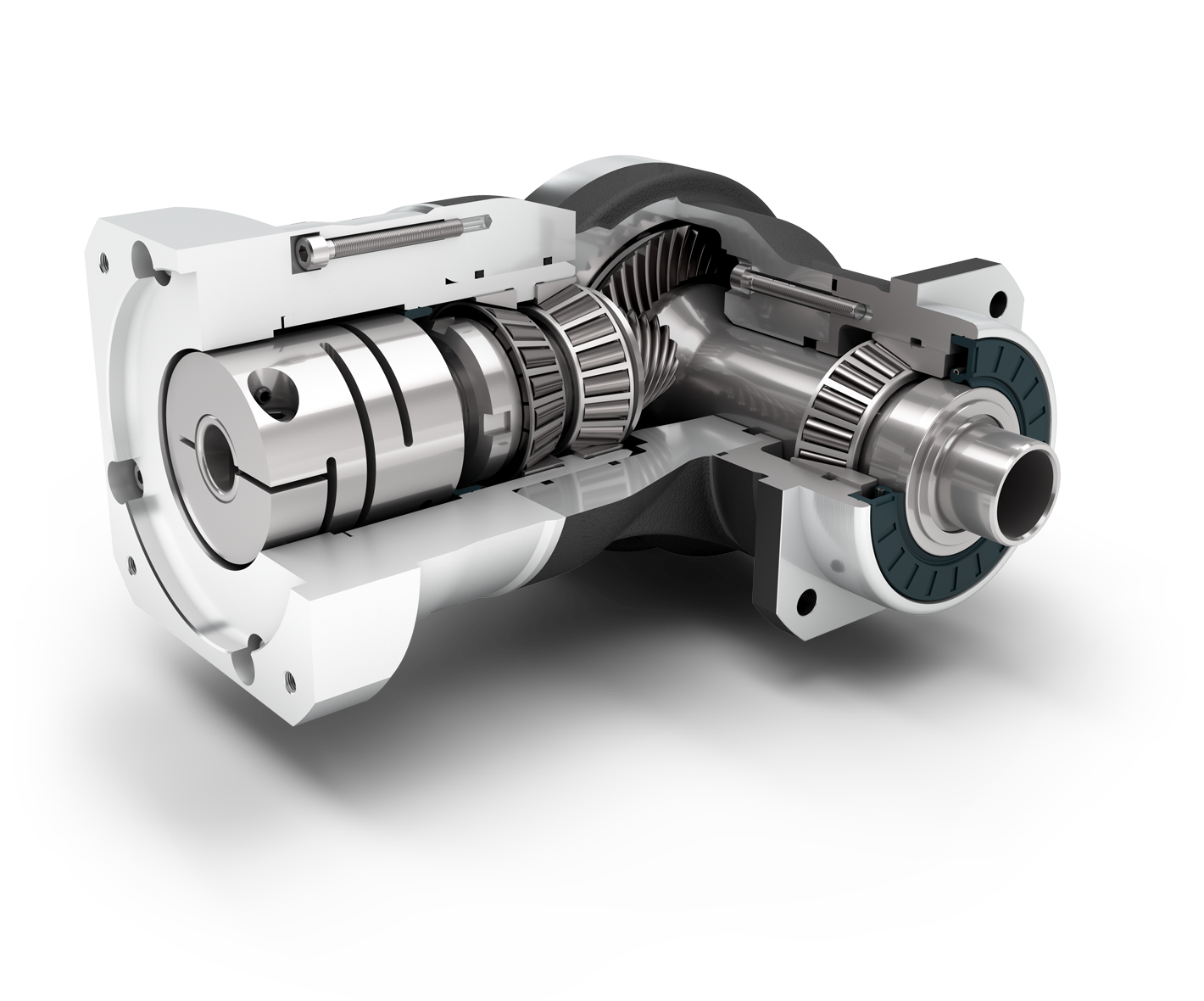
This is a type of right-angle gear reducer. It consists of two interlocked bevel gears, whose conical shape allows them to intersect at an angle. The standard angle at which the shafts transmit power is 90 degrees. Bevel gear reducers are compact, powerful, and have efficient power transmission. They're often found in hand drills, grain mills, powerplants, and more, and typically have lower torque outputs than other gearboxes.
Helical Gear Reducers
- Axes: Parallel
- Ratio range: 1:1-10:1+
- Efficiency: 94-98%
- Most suitable for: Conveyor belts, smooth runs
One of the most defining characteristics of helical gear reducers is their slanted teeth, which allows more teeth to bear the load at the same time. This reduces noise and at the same time increases the gear reducer’s strength, allowing it to handle high loads in a compact space. Helical gears are commonly used in conveyors, mixers, elevators, and machinery in industries like metallurgy, chemicals, and packaging.
Hypoid Gear Reducers
- Axes: Offset non-intersecting
- Ratio range: 3:1 to 300:1
- Efficiency: 90–96+%
- Most suitable for: servo motors, automation, robotics, conveyor systems
Hypoids are types of bevel gearboxes, but unlike standard bevel gears, their axes are offset rather than parallel. Additionally, in this type of reducer, the input shaft and output shaft can rotate in the same direction as well as in opposite directions. Similar to all gear reducers on this page, hypoid gearboxes are suitable for compact spaces. Because the gearing slides in the longitudinal direction, it requires special lubricants for efficient operation.
Worm Gear Reducers
- Axes: Right
- Ratio range: 10:1-60:1
- Efficiency: 40-85%
- Most suitable for: Elevators, self-locking
Also called a worm gearbox or worm drive, this is one of the most common types of single stage gear reducers. It has a gear shaped like a metal screw (the worm) that's interlocked with a spur-shaped wheel. And its self-locking design prevents the wheel from driving the worm, which eliminates slippage. These reducers are ideal for applications needing high transmission ratios.
.

How to Choose the Right Gear Reducer for Your Application
With so many configurations available, how do you know which gear reducer is right for your needs? In order to select the right device, you'll need this information:
- Output torque
- Speed reduction ratio
- Mounting style
- Physical constraints
- Input power source
To make sure the gear reducer is appropriate for its environment and workload, you should also consider things like the noise level and type of lubrication you need.
Even if you're not sure, you don't have to figure it out all by yourself. Try Neugart's Tec Data Finder to discover the most appropriate gear reducer for your use case.
Is a Gear Reducer the Same as a Gearbox?
While industry experts use these two terms interchangeably, they are technically not the same. All gear reducers are gearboxes, but not all gearboxes are reducers.
Strictly speaking, a gearbox is the enclosed set of gears that transmits power from a motor to machinery, and, depending on how it is configured, can also increase speed, as well as reverse direction, transmit power, etc.
A gear reducer is a specific type of gearbox that takes the high speed from a motor and lowers it to produce more torsional force. At Neugart, we are a leading gear reducer manufacturer - all of our gearboxes are engineered as gear reducers.
Our Gear Products
- Economy Gear Reducers
- Precision Gear Reducers
- Application-Specific Gear Reducers
- Customized Gear Reducers

Let's stay in touch
Subscribe to our newsletter
Be the first to know about new products, trade shows, training dates and stay up to date.
SubscribeSocial Media